Table of Contents
The 50 Millisecond Judgment
Imagine you wake up at 3:00 AM to the sound of rushing water. A pipe has burst. You need an emergency plumber right now. You grab your smartphone, search "emergency plumber near me," and quickly open the first two websites.
The first website is incredibly cluttered. The text is tiny, the images look like pixelated stock photos from 1998, and there's no phone number immediately visible. You have to pinch and zoom to read anything.
The second website is clean. It loads instantly. The design uses calming, professional colors. Right at the top, in large bold letters, it says "24/7 Emergency Services" with a giant "Call Now" button right next to a photo of a branded, modern plumbing truck.
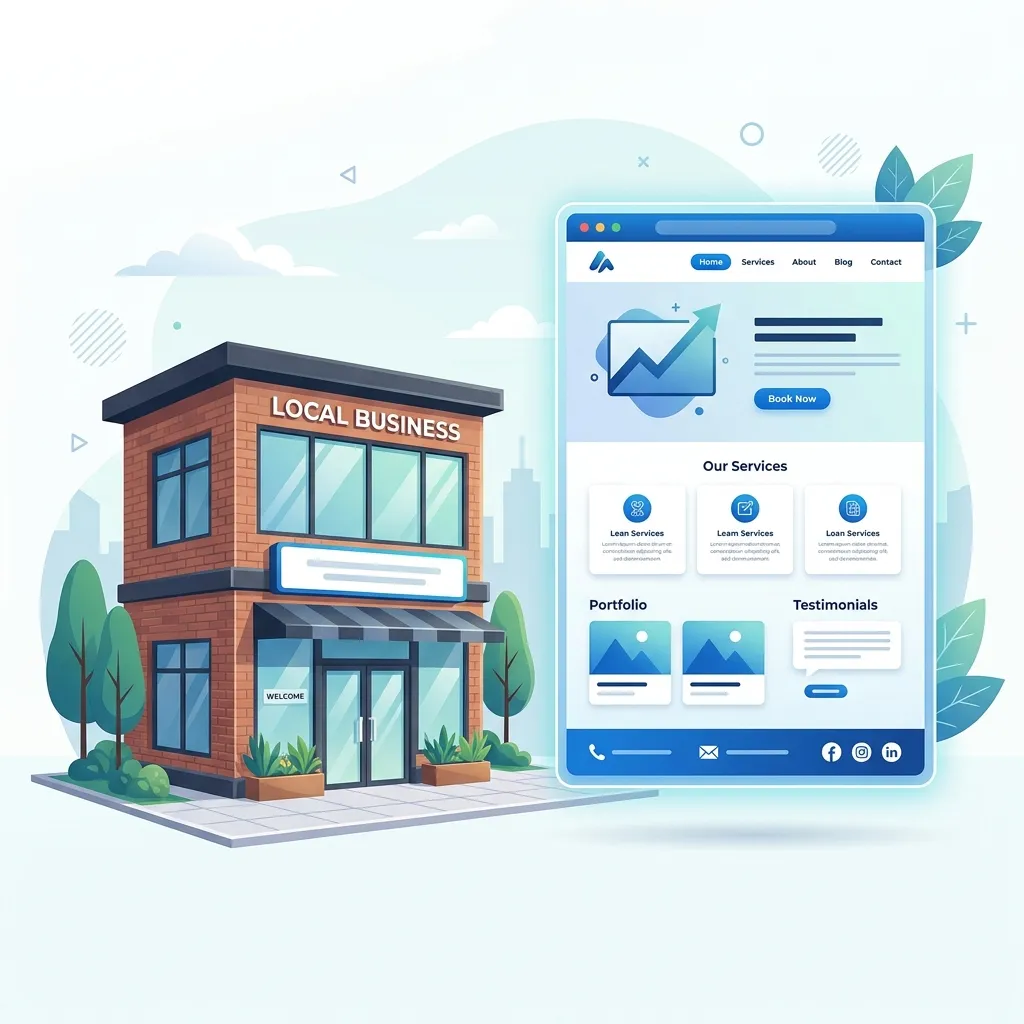
Who do you call? The answer is obvious. For local businesses, your website is often the first and only interaction a potential customer has with your brand. They are judging your competence based on pixels on a screen. In this comprehensive guide, we'll explore exactly what makes a local business website look instantly trustworthy.
1. The Power of Snap Judgments
In behavioral psychology, the "halo effect" is a cognitive bias where our overall impression of a person (or in this case, a business) influences how we feel and think about their character. Studies by Google and other leading tech researchers show that users form an opinion about a website in less than 50 milliseconds. That's faster than the blink of an eye. This initial judgment is almost entirely visual.
Crucial Note: If your site looks unprofessional, users assume your business is unprofessional. It doesn't matter if you are objectively the best roofer, accountant, or landscaper in town; a bad website will actively drive customers to your competitors.
When a website looks outdated, users subconsciously worry that the business's practices are outdated. Conversely, a modern, polished website signals that the business is thriving, detail-oriented, and cares deeply about customer experience.
2. Modern, Clean Design Without Clutter
Trustworthy websites don't need to be overly complicated. In fact, simplicity is almost always best. A clean layout with plenty of "white space" (the empty space between elements) makes your content easier to read and digest. It prevents the user from feeling overwhelmed.
The Psychology of Color and Fonts
Avoid using too many different colors or overly aggressive fonts. Stick to a professional color palette that matches your brand logo. Blue often signals trust and dependability (which is why many financial and medical institutions use it), while green signifies growth and eco-friendliness. Your fonts should be standard, legible sans-serifs that render perfectly on mobile devices.
Authentic Photography over Stock Images
Nothing screams "fake" faster than a generic stock photo of people in suits shaking hands while smiling at the camera. Use high-quality, authentic photos of your actual business whenever possible. Show your storefront, your branded vehicles, your team in uniform, and real before-and-after shots of your work. Authenticity breeds trust.
Does your website look outdated?
We specialize in designing clean, modern, and highly trustworthy websites specifically tailored for local businesses. Stand out from your competitors.
View Our Packages3. Clear, Accessible Contact Information
Nothing destroys trust faster than making a customer hunt for your phone number. If a user has to click through three pages just to find out how to hire you, they will simply leave. Your contact information should be the easiest thing to find on your entire website.
- The Header: Place your phone number in the top right corner of the header. On mobile devices, this should be a clickable "click-to-call" button.
- The Footer: Put your physical address, phone number, and current business hours in the website footer on every single page.
- Dedicated Contact Page: Include a dedicated Contact section or page with a simple, functioning form. Don't ask for too much information upfront; name, email, phone, and a brief message are enough.
To understand the massive impact of contact buttons, read our article on How Clear Contact Actions Help Local Businesses Get More Customer Inquiries.
4. Social Proof and Verifiable Reviews
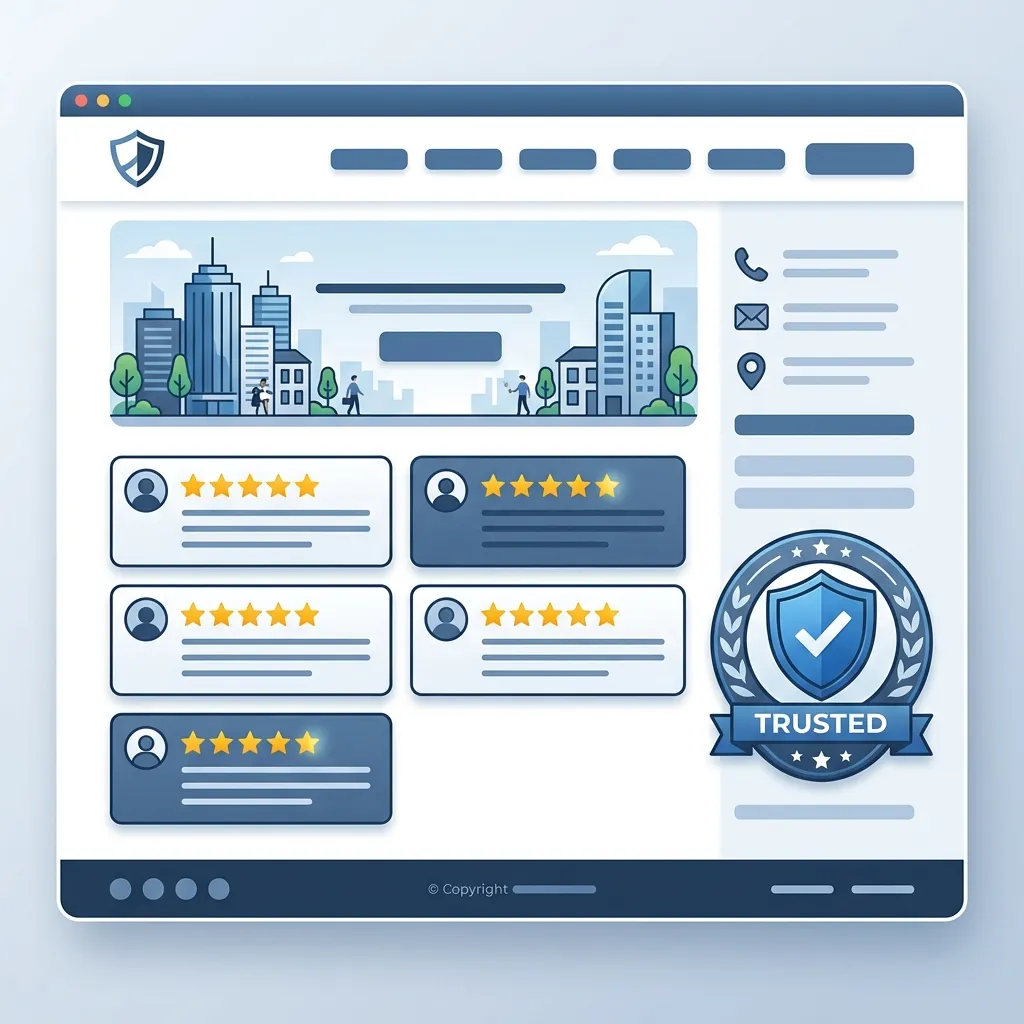
People inherently trust other people. In the digital age, word-of-mouth has evolved into online reviews. Including testimonials, Google reviews, or detailed case studies on your website is one of the fastest and most effective ways to build credibility.
However, you must present them correctly. Don't just paste plain text with a generic name like "John D." Use real full names. If possible, pull the reviews directly using a widget that links back to the original Google Review or Yelp page. This proves they are real.
If you have won local awards, been featured in the local newspaper, or are a member of the local Chamber of Commerce or Better Business Bureau, display those badges proudly near your footer or in an "As Seen In" section.
5. Flawless Mobile Experience
Over 60% of all local searches happen on mobile devices. Think about when people search for "restaurants near me" or "emergency towing"—they are in their cars or on the couch using their phones.
If your website requires users to "pinch and zoom" to read the text, they will leave immediately. Google also actively penalizes websites that are not mobile-friendly, pushing them down the search rankings. A trustworthy website is fully responsive, meaning it automatically adapts to look perfect and function smoothly on any screen size, whether it's an iPhone, an iPad, or a massive desktop monitor.
6. Security and Speed (The Hidden Trust Signals)
While design is the visual aspect of trust, technical performance is the invisible aspect. If a user visits your site and their browser displays a massive warning saying "Not Secure," they will bounce immediately. Your website must have an active SSL certificate (meaning the URL starts with HTTPS and shows a padlock icon).
Furthermore, speed is critical. If your website takes 8 seconds to load, it looks broken. A fast-loading website feels crisp, professional, and reliable. At Crest Pages, we optimize all code and images to ensure lightning-fast load times.
Frequently Asked Questions
Q: Should I list my prices on my website?
A: Yes, whenever possible. Even if you provide custom services (like construction or consulting), providing a "Starting at..." price or a general pricing guide sets expectations and builds massive trust. It shows you are transparent and have nothing to hide.
Q: Are stock photos ever acceptable?
A: They can be used sparingly for background textures or abstract concepts, but never use stock photos to represent your team, your office, or your past work. Customers can spot fake photos easily, and it immediately erodes trust.
Conclusion: Trust is Your Best Salesperson
Building trust online isn't about using fancy, confusing animations or overly complex features. It's about providing a clear, highly professional, secure, and user-friendly experience. When a potential customer lands on a site that respects their time and clearly communicates value, they are far more likely to pick up the phone.
If you need help upgrading your local business's online presence to establish immediate credibility, learn more about Crest Pages and how we can help you build a rock-solid foundation.